
Object or insect stuck in the ear
Assessment and removal of suitable objects, debris or insects lodged within the ear canal.
 Book Online
Call Us to Book
Book Appointment
Book Online
Call Us to Book
Book Appointment
Doctor-led private ear care
Private assessment and careful removal of objects stuck in the ear for adults, carried out by a GMC-registered doctor with specialist ENT training at Nottingham Ear Clinic.
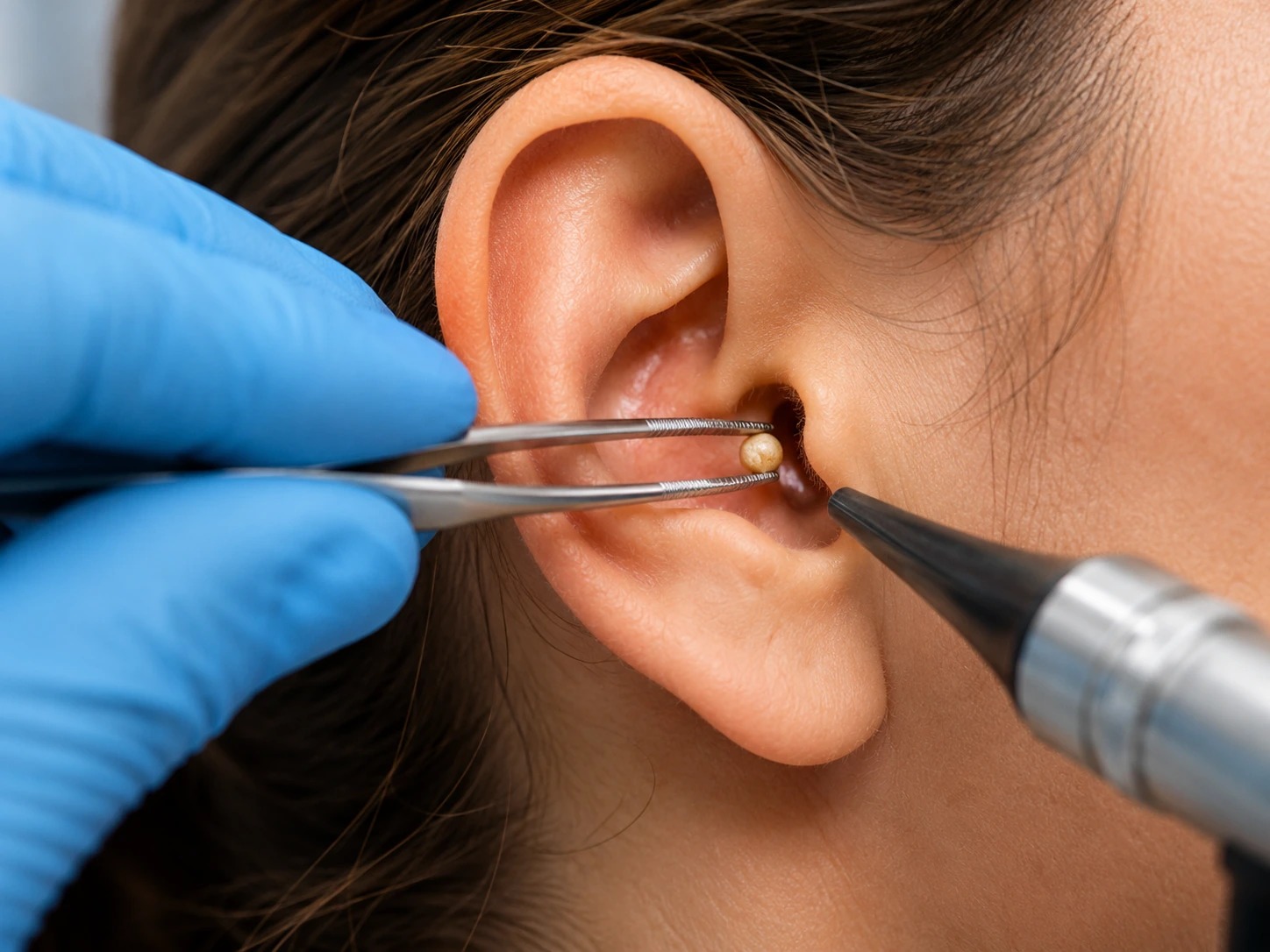
Foreign Body Removal
Objects stuck in the ear can cause discomfort, blocked hearing, pain, discharge, bleeding, irritation or anxiety. Common examples include hearing aid domes, ear plug fragments, cotton bud tips, debris, small objects and, occasionally, insects that have entered or become trapped in the ear canal.
Foreign bodies in the ear often lead patients to attend a local A&E department, particularly when the object is deep, uncomfortable or difficult to see. Nottingham Ear Clinic is a specialist doctor-led ENT clinic, and our clinical leadership includes experience working within ENT departments at Queen’s Medical Centre. Our doctors use medical-grade ENT instruments and careful direct visual assessment to remove suitable objects safely in clinic wherever appropriate.
Leaving an object in the ear, or attempting removal at home, can increase the risk of ear canal injury, infection, bleeding, worsening pain, reduced hearing, impacted debris or, in more serious cases, damage to the eardrum. The safest approach is careful clinical assessment before removal is attempted.
Assessment and removal of suitable objects, debris or insects lodged within the ear canal.
Hearing may feel muffled if the ear canal is obstructed by an object or debris.
Foreign bodies can scratch or irritate the ear canal and should be assessed carefully.
Discharge, bleeding or wetness after an object becomes stuck should be reviewed clinically.
Soft hearing aid domes can detach and remain in the ear canal without being visible from outside.
If you are unsure whether symptoms are caused by wax, infection or a foreign body, your doctor can assess this.
Your doctor will ask what happened, when symptoms started, what the object may be, and whether there is pain, discharge, bleeding, dizziness or hearing change.
The ear canal and eardrum will be examined carefully using appropriate clinical instruments, such as a digital otoscope, to assess the object’s position and whether removal is safe.
If suitable, your doctor will use appropriate clinical technique and equipment to remove the object while minimising irritation to the ear canal.
After removal, the ear canal and eardrum will be checked again and you will receive clear advice about aftercare, warning signs and whether review is needed.
Specialist doctor-led removal
Removing something from the ear is not the same as simply pulling an object out. The ear canal is narrow and sensitive, and the eardrum can be injured if the object is pushed deeper or removed with the wrong technique.
At Nottingham Ear Clinic, your doctor will assess the object, the ear canal and the eardrum before deciding whether removal is appropriate in clinic. Suitable cases can be managed using careful ENT techniques and medical-grade instruments commonly used in hospital ear services.
Time to discuss your symptoms, what may be in the ear, previous ear problems and any treatment already attempted.
Careful assessment of the ear canal and eardrum to confirm the object’s position and check for irritation, swelling, wax or infection.
Clinical images or video may be used to document findings and help explain what is seen inside the ear.
Removal is carried out where clinically appropriate using suitable equipment and a technique chosen for the type and position of object.
The ear is re-examined after removal to assess the ear canal, eardrum and whether any irritation or injury is present.
If wax, debris or loose material is present around the object, microsuction may be used where clinically appropriate to help improve visibility and support safe treatment.
You will receive clear advice on keeping the ear safe, what symptoms to monitor and when further review may be required.
If removal is not safe in clinic, your doctor will explain why and advise on the most appropriate next step, including hospital ENT input where needed.
Please avoid trying to remove the object yourself with cotton buds, tweezers, hair grips or other tools, as this can push it deeper or injure the ear canal.
If the object may be a button battery, a sharp item, or you have severe pain, dizziness, bleeding or facial weakness, seek urgent medical advice rather than waiting for a routine appointment.
Your doctor will explain whether the ear canal is healthy after removal and whether it should be kept dry. Avoid putting anything into the ear after treatment unless advised.
If pain, discharge, bleeding, dizziness or hearing change develops after the appointment, you should seek medical advice promptly.
If a foreign body is not the cause of your symptoms, your doctor may recommend one of our related services.

Doctor-led assessment for ear pain, blocked ears, discharge, dizziness, tinnitus or hearing concerns.

Safe wax removal using ENT-grade microscope equipment where wax build-up is contributing to symptoms.

Doctor-led assessment and treatment advice for ear pain, discharge, itching and infection symptoms.

Advice on hearing assessment and hearing care where hearing changes need further review.
Common questions about private foreign body removal at Nottingham Ear Clinic.
No. Adults can book directly with Nottingham Ear Clinic for assessment of an object stuck in the ear.
Depending on the examination findings, suitable objects may include hearing aid domes, ear plug fragments, cotton bud tips, debris and other small objects. Your doctor will only attempt removal if it is clinically safe to do so.
It is usually safer not to attempt removal yourself. Cotton buds, tweezers or other household tools can push the object deeper, scratch the ear canal or injure the eardrum.
Your doctor will explain why removal is not appropriate and advise on the safest next step, including hospital ENT input where clinically needed.
Yes. The ear canal and eardrum are checked after removal so your doctor can assess for irritation, bleeding, infection, swelling or other concerns.
Nottingham Ear Clinic currently provides private ear care for adults aged 18 and over only.

 Same-day and
  Expert ENT care in a
  Friendly team here
  Book OnlineIt only takes a few clicks
 Call Us0115 837 2252